



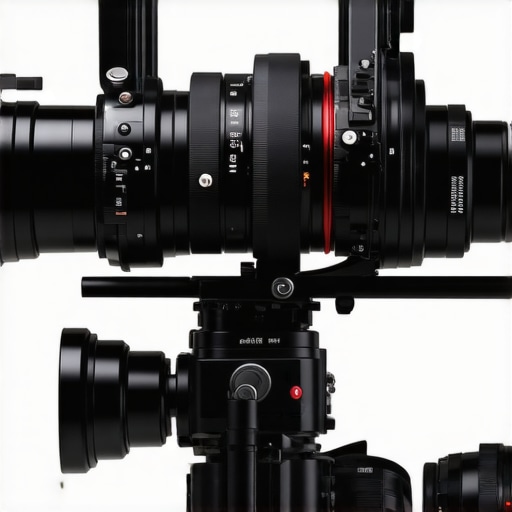
Ever had that sinking feeling when your shot just doesn’t look right, and you realize it’s because your lens choice isn’t optimized for your camera or project? I remember countless late nights experimenting with mismatched lenses, only to be frustrated by inconsistent results or unexpected technical glitches. It was a real lightbulb moment when I finally understood how crucial the right cine lenses are—especially in 2025, where technology advances so rapidly that even seasoned filmmakers can get lost in the details.
Why Picking the Right Cine Lens Matters More Than Ever
In 2025, the landscape of filmmaking equipment is evolving faster than ever. With new prime and zoom lenses offering unprecedented clarity and versatility, knowing how to choose and adapt your lenses can make or break your project. But here’s the thing: it’s not just about having the latest gear. It’s about understanding the nuances—like how different lens mounts impact image quality, or how adapters can unlock hidden potentials in your existing setup. I learned this the hard way early on, making the mistake of assuming all lenses are created equal—which cost me time, money, and some seriously frustrating shoot days.
However, with a bit of guidance, I found that mastering your lens choices dramatically improves your storytelling. That’s why I want to share practical tips and insights on selecting prime versus zoom lenses, using adapters effectively, and avoiding common pitfalls. Whether you’re a seasoned pro or just starting out, these strategies can help you get the most out of your gear and elevate your craft.
Have you faced issues with incompatible lenses or confusing adapter options? You’re not alone. Many filmmakers stumble over these technical details early on, but understanding the ins and outs can save you countless headaches. Trust me, I’ve been there, and I’ve learned that the right knowledge can turn a frustrating shoot into a smooth, creative process.
Ready to dive into the practical steps that will help you optimize your lens setup in 2025? Let’s get started.
Check Compatibility Before Investing
Start by verifying your camera’s lens mount type. Compatibility issues can derail your shoot if overlooked. Visit this guide to identify your mount and match it with suitable cine lenses or adapters. I once bought a gorgeous prime lens only to find it wouldn’t fit my Sony FX6 without an adapter, wasting valuable time. Double-checking compatibility first saved me from that mistake.
Choose Prime or Zoom Based on Your Scene
Decide whether a prime lens or a zoom best suits your project. Prime lenses offer superior sharpness and low-light performance, ideal for controlled environments. Zoom lenses provide versatility, perfect for dynamic scenes or when quick adjustments are needed. I once used a 24-70mm zoom for a fast-paced documentary, which saved me from changing lenses multiple times and kept the shoot seamless. For detailed insights, explore this article.
Optimize Lens Mounts with Quality Adapters
Adapters are your best friends when working across different mounts. Select high-quality adapters to prevent image degradation and maintain sharpness. For instance, I used a Metabones adapter to mount a Canon lens on my Blackmagic camera, which retained full image quality. To maximize performance, refer to this list of top adapters. Properly installed adapters reduce vignetting and focus shift, ensuring your shots stay crisp.
Master Focusing Techniques for Cinematic Sharpness
Achieving precise focus is crucial. Use manual focus with focus peaking or magnification tools, especially on prime lenses. During a recent shoot, I practiced pulling focus with a follow focus device, which made my shots look more professional and cinematic. Practice makes perfect—don’t shy away from testing different focusing methods to find what works best for you. Learn more about these focusing tips.
Test and Calibrate Your Gear Regularly
Consistently check your lens calibration and focus accuracy before shoots. Small misalignments can introduce softness or focus errors. I once did a quick calibration session with a lens chart, which improved my focus pulls significantly. Regular maintenance and testing ensure your gear performs at its peak and reduces post-production fixes. For calibration techniques, see this calibration guide.
Leverage the Latest Innovations
Stay updated with new lens technologies and features. Check out this year’s prime lens innovations to see what’s trending. Incorporate new features like improved coatings or lightweight designs to enhance your shooting experience. I recently upgraded to a mirrorless-compatible lens with advanced coatings, which reduced flare and improved contrast in bright sunlight. Keep experimenting to find what elevates your storytelling.
Many filmmakers fall into common traps when selecting and using cine lenses, often due to misconceptions that persist despite technological advances. Let’s dig deeper into what most people get wrong about cine lenses in 2025, and how to sidestep these costly mistakes.
Is Buying the Most Expensive Lens Always the Best Choice?
Contrary to popular belief, the most expensive lens isn’t necessarily the perfect fit for your project. High price tags often come with features that may not benefit your specific shooting style. For example, a top-tier prime lens might offer stunning sharpness but lack the versatility you need for dynamic scenes. Instead, focus on matching lens characteristics—like aperture, focal length, and mount compatibility—with your workflow. Remember, a well-chosen mid-range lens can outperform an overpriced one if it aligns with your creative goals. For a detailed comparison, check this guide.
Beware of the Adapter Trap
Adapters can seem like a quick fix to use different mounts, but they often introduce subtle issues that degrade image quality or cause focus shifts. Many filmmakers underestimate the importance of high-quality adapters, leading to vignetting or focus inconsistencies. Investing in premium adapters—like those listed here—can preserve your lens’s optical integrity. My own experience taught me that a cheap adapter might save money upfront but can cost dearly in post-production corrections or re-shoots. Always test your adapters thoroughly before critical shoots.
Are You Overlooking the Power of Calibration?
Many assume that lenses stay perfectly calibrated out of the box, but even small misalignments can cause focus softness or inconsistent image quality. Regular calibration, especially when using adapters or switching lenses frequently, is essential. I recommend calibrating with a lens chart prior to every major project—something I learned after wasting hours fixing focus issues in post. This step ensures your gear performs reliably, saving time and enhancing your cinematic look. For calibration tips, see this ultimate guide.
What Advanced Techniques Can Elevate Your Lens Use?
Beyond basic compatibility and calibration, mastering focus pulling with focus peaking, or experimenting with lens coatings to reduce flare, can significantly improve your results. Many overlook these nuances, but they often make the difference between amateur and professional footage. Staying updated with latest lens innovations helps you leverage new features that optimize your storytelling. Remember, technology is evolving—what worked in 2023 might be outdated if you don’t keep up.
Have you ever fallen into this trap? Let me know in the comments. Avoiding these misconceptions will help you make smarter choices, save money, and ultimately produce more cinematic results. Keep experimenting, stay informed, and your lens setup will become a powerful tool in your filmmaking arsenal.
Maintaining your cine lenses and gear over time is crucial to ensuring consistently high-quality footage and extending the lifespan of your investments. As technology advances rapidly in 2025, keeping your equipment in peak condition requires a combination of proper handling, regular checks, and using the right tools. In this section, I’ll share the specific methods and tools I personally rely on to keep my cine lenses performing flawlessly.
How do I maintain my cine lenses and accessories over time?
First and foremost, always handle your lenses with clean hands and store them in a dust-free environment, ideally in dedicated cases with silica gel packs to prevent moisture buildup. I personally use a microfiber cleaning cloth and lens cleaning solution for routine maintenance—these tools are essential for removing dust, smudges, and fingerprints without scratching the glass. For more stubborn dirt or dried-on residue, a lens blower and a soft brush are invaluable. Regularly inspecting your lenses for scratches or focus shift helps catch issues early, saving you from costly repairs later.
Calibration is another vital aspect. Even high-end lenses can go out of alignment, especially when used with adapters or subjected to temperature fluctuations. I recommend calibrating your lenses periodically with a lens chart—this process ensures your focus remains sharp and consistent across different shooting scenarios. For this, I use a high-quality focus chart and a digital focus peaking device, which makes fine-tuning much more precise.
Investing in a professional lens repair kit is a smart move for serious filmmakers. Kits typically include adjustment screws, calibration tools, and cleaning supplies. Having these on hand allows you to perform minor adjustments yourself, avoiding downtime and expenses. This resource provides excellent guidance on maintenance routines and calibration techniques specific to cine lenses.
What tools do I recommend for long-term gear health?
For cleaning, I swear by a combination of a microfiber cloth, lens cleaning solution, and a blower brush. These tools help keep your glass pristine and free from particles that can cause micro-scratches or focus issues. For calibration, a focus chart combined with a digital focus peaking monitor is indispensable—this combo ensures your focus pulls are accurate and cinematic. I also use a small, portable light meter to verify exposure consistency across different lenses, especially when switching between prime and zooms.
To extend your gear’s lifespan, always avoid exposing lenses to extreme temperatures or humidity, which can cause internal fogging or mold. When not in use, keep your lenses in a climate-controlled environment, ideally with silica gel packs to control moisture. Regularly inspecting and cleaning your gear, combined with proper storage, can dramatically improve their performance and longevity.
Looking ahead, I believe the trend in 2025 is toward smart, self-calibrating lenses that can connect to apps for real-time diagnostics. While these innovations are still emerging, incorporating current tools like focus charts and calibration devices into your routine ensures your gear stays reliable. I encourage you to try out a professional calibration kit this month—it’s a game-changer for maintaining cinematic sharpness and consistency over time.
Remember, investing time in proper maintenance not only preserves your equipment but also elevates your filmmaking quality. Keep your tools clean, calibrated, and stored correctly, and your gear will serve you faithfully for many projects to come. If you want more detailed guidance on maintaining your cine lenses, check out this comprehensive guide.
The Hardest Lesson I Learned About Cine Lenses in 2025
One of the toughest lessons I encountered was assuming that the latest, most expensive lenses would automatically elevate my filmmaking. It wasn’t until I realized that compatibility and calibration are the real game-changers that my footage improved dramatically. This taught me that understanding your gear deeply saves time and elevates your storytelling, rather than just chasing the latest trends.
3 Myths About Cine Lenses That Held Me Back
For years, I believed that only high-end prime lenses could deliver professional results. I also thought adapters always degraded image quality, and that calibration was a one-time setup. Breaking these myths opened new doors; I learned that mid-range lenses can outperform costly ones if used correctly, and that regular calibration is essential regardless of your gear’s price tag.
What Experts Won’t Tell You About Lens Selection in 2025
Many professionals overlook the importance of lens coatings and how they influence flare and contrast, especially with new innovations emerging in 2025. Incorporating the latest coatings and lightweight designs can make a huge difference, and most experts neglect to mention how crucial proper storage and maintenance are for longevity. Getting these details right sets you apart in a competitive industry.
My Essential Toolkit for Cine Lens Mastery
- High-Quality Adapters: I trust top adapters to maintain image integrity across mounts.
- Focus Charts & Calibration Devices: Regular calibration keeps my focus sharp; I recommend the ultimate calibration guide.
- Cleaning Supplies: Microfiber cloths, lens solution, and blower brushes are essential for pristine glass.
- Knowledge Resources: Staying updated with latest lens innovations ensures I always leverage new features.
Your Turn to Try
Embracing the nuances of cine lenses in 2025 can truly transform your filmmaking. Don’t just settle for what’s easy—invest in understanding your gear, maintain it diligently, and stay curious about new innovations. Your future projects will thank you for it.
What’s the biggest challenge you’ve faced when choosing or using cine lenses? Share your story below—I’d love to hear it!
![Fix 256K Ghosting: 3 Prime Lenses With Nano-Shields [2026]](https://lenses.cinegearguide.com/wp-content/uploads/2026/04/Fix-256K-Ghosting-3-Prime-Lenses-With-Nano-Shields-2026.jpeg)
Leave a Reply