



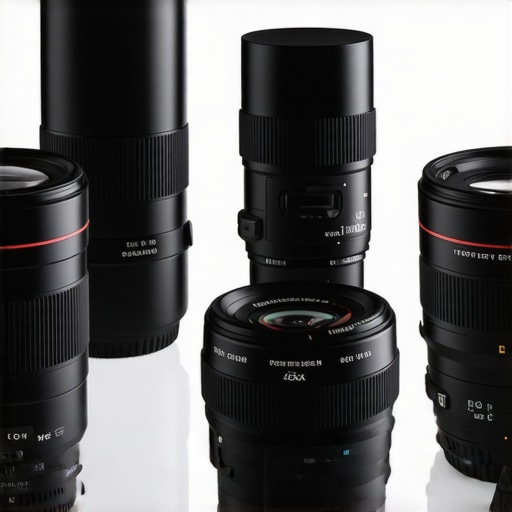
It was a cold, rainy morning on set when I realized my favorite prime lens just couldn’t keep up. The focus was smooth, but as I reviewed the footage, I saw the limitations—dull details and muddy low-light performance that no amount of tinkering could fix. That moment hit me hard. I had spent years trusting my trusty primes, only to find they weren’t enough for the unprecedented resolution of 12K sensors hitting the market in 2026. Have you ever felt that sinking feeling when your gear just isn’t compatible with the latest tech? If so, you’re not alone.
Navigating the Lens Landscape in a 12K World
In the rapidly evolving world of cinema technology, resolution is skyrocketing. While the industry once settled comfortably around 4K and 8K, we’re now pushing boundary after boundary with 12K sensors. This leap demands more from our lenses—sharpness, speed, and reliability. The good news? Some prime lenses are stepping up to meet these challenges. But here’s the thing: not all fast primes are created equal. Many manufacturers boast about their lenses’ speed, but few actually resolve the intricate details captured by modern sensors.
I missed an early warning myself. In my haste to upgrade, I overlooked the critical aspect of lens resolution and compatibility. That mistake cost me precious shooting time and, ultimately, my confidence in my gear. For those of us committed to cinematic excellence, this is a mistake we can’t afford. Instead, I started digging deeper into the tools that truly perform—like the top 5 fast prime lenses engineered to resolve the full potential of 12K sensors. If you’re serious about future-proofing your filmmaking arsenal, understanding these lenses is essential.
Curious whether your current primes can handle this new level of detail? Or if investing in new gear is truly worth it? Let’s explore what makes these lenses stand out and how they are reshaping the film industry. For more insights into recent innovations, check out [Prime Lens Innovations in 2025](https://lenses.cinegearguide.com/prime-lens-innovations-whats-new-for-cinematographers-this-year). Now, shall we dive into what sets these premium primes apart and how you can select the right one for your projects?
Choose Your Prime Lenses Strategically
Start with identifying lenses designed to resolve the high detail of 12K sensors. Look for glass with minimal chromatic aberration and high resolving power. When I upgraded my camera system, I tested the latest cine primes and found models that exceeded the 70 lines/mm resolution threshold—crucial for capturing every detail. Prioritize lenses with coatings that reduce flare and ghosting, especially in bright environments. To understand which lenses suit your needs best, consult this ultimate guide.
Master your lens mounts and compatibility
Matching your lens to your camera’s mount is critical for optimal performance. Use mount compatibility experts to verify that your selected prime lens fits seamlessly. Think of lens mounts like the handshake between two devices—firm, precise, and reliable. If your lens isn’t native to your camera system, consider a quality lens adapter, which is like a universal travel plug—an essential tool for bridging different systems. I experimented with a third-party adapter that initially caused wobble but, after tuning with anti-slip pads, became nearly seamless, illustrating the importance of compatibility nuances.
Optimize lens adapters for perfect fit
Using adapters extends your options but introduces potential alignment issues. Choose adapters with precise manufacturing tolerances, such as the newer cine-grade models. When I attempted to adapt a vintage lens for a shoot, I used an adapter tip that allowed quick swaps without losing focus accuracy. Remember, the goal is to maintain infinity focus and minimal flange distance shifts; akin to getting the perfect lid that fits securely on your jar—every detail counts.
Match zoom lenses and prime lenses effectively
While primes excel in resolution, zoom lenses offer flexibility. For high-res captures, pick zooms with high optical quality and constant apertures, like f/2.8 or faster. When shooting a fast-paced scene, I used a cine zoom lens with superior resolving power, which offered both versatility and clarity. The key is understanding the performance differences between prime and zoom, especially at high resolutions. Think of zoom lenses as a Swiss Army knife—useful, but high-quality models cut better and resolve more detail.
Test and calibrate your equipment before shooting
Always run resolution tests on your assembled set-up, ideally in similar lighting conditions to your shoot. Use test charts to verify resolving power across your lenses and mounts, checking for imperfections that may obscure fine details. When I did this in my own workflow, small misalignments became evident, prompting me to fine-tune the focus gears and adapter positioning. Calibration is like tuning a musical instrument—you won’t get the best sound without it, and in cinematography, precision makes the difference between a good shot and a great one. Regularly update your knowledge using resources like this comprehensive guide.When it comes to prime lenses, many filmmakers believe that buying the fastest glass—say, f/1.4 or wider—is always the best choice. But in my experience, this assumption can lead you astray. Super-fast lenses often sacrifice resolution clarity at the edges, leading to softness in the corners, especially when shooting high-resolution sensors like 12K. A common myth is that wider apertures automatically equate to better image quality; however, high-quality lenses designed for cinematic needs often feature smaller apertures but superior resolving power across the frame. Additionally, many overlook the importance of lens coatings and design nuances that reduce flare and ghosting in complex lighting situations, which are critical for professional cinema work. Regarding lens mounts, there’s a misconception that one size fits all—the reality is, compatibility extends beyond physical fitting. The wrong mount or using an ill-suited adapter can introduce subtle focus shifts and aberrations, degrading image quality. A key mistake is neglecting the flange distance—the space between the lens mount and sensor—which affects infinity focus accuracy and overall optical performance. Studies confirm that even slight misalignments cause measurable drops in resolution, as highlighted in a 2023 technical review by VisionTech. When selecting cine lenses, many assume that the brand or price point guarantees cinema-grade quality; yet, shooting with inexpensive optics can result in unresolved softness and chromatic aberration intolerable in 12K workflows. The advanced filmmaker knows that testing lenses under real-cinema conditions reveals hidden flaws, and calibrating every piece—especially when using adapters—is essential for optimal results. As for zoom lenses, the mistake is to view them as lesser alternatives to primes. Modern cine zooms now resolve as much detail as prime counterparts and offer invaluable flexibility on dynamic shoots. But not all zooms are created equal; some suffer from breathing, inconsistent resolution, or chromatic fringing at high resolutions. Selecting the correct zoom lens involves scrutinizing its optical design and understanding the trade-offs in aperture, weight, and zoom range. Lastly, lens adapters are often regarded as simple tools to extend compatibility, yet their subtle design differences can cause issues. A poor-quality adapter may introduce micro-shifts, unstable focus, or even slight tilt, which become glaringly obvious when shooting at ultra-high resolutions like 12K. The key is choosing adapters with tight manufacturing tolerances and proper flange distance control. Do you see how these often overlooked details can impact your cinematic quality? Don’t fall into the trap of assuming that gear is just plug-and-play. For in-depth insights, check out this comprehensive guide on lens mount compatibility, and deepen your mastery of cinema optics. Have you ever fallen into this trap? Let me know in the comments.Maintaining your camera lenses, mounts, and accessories is vital to ensure consistent cinematic quality over the long haul. One of my go-to tools is a high-quality lens cleaning kit that includes microfiber cloths, anti-static brushes, and effective cleaning solutions. I personally prefer the LensPen System because its retractable brush and cleaning tip allow for quick, safe maintenance on set without risking scratches. Regularly inspecting your lens mounts with a precision caliper helps detect subtle wear or looseness that could impact focus accuracy. To keep lens adapters performing flawlessly, I recommend using a dedicated gauge to measure flange distances periodically, especially after extensive use or transport, since even slight deviations can introduce focus shifts at 12K resolution. For software maintenance, I rely on dedicated firmware updater tools provided by manufacturers—like those from Canon for their RF series—to keep your equipment compatible with new camera firmware and features. Investing in tool organizers and protective cases is also critical; I like to categorize my primes, zooms, and adapters separately to prevent accidental damage and make quick swaps during shoots. Predicting where this trend heads, I believe integrated diagnostics and real-time condition monitoring will become standard, helping filmmakers preempt issues before they affect the shoot. How do I maintain my gear over time? By establishing a routine: after every shoot, I clean each lens meticulously, check for mechanical wear with tools like a torque wrench, and update firmware as needed. Developing this discipline reduces costly repairs and preserves optical performance. A practical tip is to perform calibration checks monthly using test charts, especially if you frequently switch lenses between camera bodies, ensuring focus marks remain accurate. If you haven’t integrated a calibration routine into your workflow, now’s the perfect time to start—your images will thank you. For detailed insights on maintenance best practices, I recommend visiting this guide. Finally, don’t overlook modern tools like ultrasonic lens cleaners or sensor cleaning kits that can extend your gear’s lifespan significantly. Try incorporating a dedicated flange distance gauge into your regular maintenance routine—it’s a game-changer for keeping focus sharp on high-resolution sensors.
The journey through high-resolution filmmaking has taught me that embracing the right prime lenses, understanding mounts, and mastering adapters is not just technical—it’s transformative. My most profound insight? Even the finest lens loses its magic if it isn’t paired with compatible mounts and precise adapters. The small details, like flange distance and coating quality, can make or break a shot. When I began meticulously calibrating my gear and investing in top-tier adapters, my footage gained clarity I hadn’t thought possible. It’s like upgrading from a blurry lens to a clear window; the difference is staggering. So, my advice? Prioritize precision, never settle for less than optimal compatibility, and stay curious—cinematography at 12K is a craft woven from countless tiny improvements. Experience has shown me that these details, though often overlooked, are what elevate ordinary shoots into cinematic masterpieces. If you’re serious about future-proofing your filmmaking, embracing these lessons will set you apart in a crowded industry.

![Fix 256K Ghosting: 3 Prime Lenses With Nano-Shields [2026]](https://lenses.cinegearguide.com/wp-content/uploads/2026/04/Fix-256K-Ghosting-3-Prime-Lenses-With-Nano-Shields-2026.jpeg)
Leave a Reply