



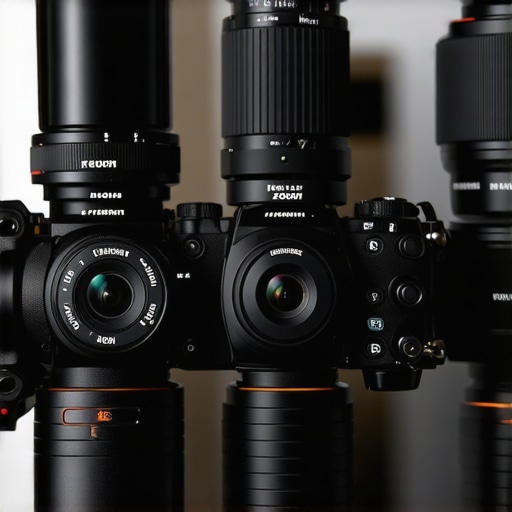
Ever spent hours fiddling with a lens adapter, only to realize your shot is out of focus or the image quality drops dramatically? I’ve been there. That frustrating moment when a perfect shot slips away because I didn’t understand the nuances of lens mounts or failed to pick the right adapter. It’s a common struggle among filmmakers and photographers trying to maximize the potential of their gear without breaking the bank.
Why Getting the Right Lens Mount and Adapter Matters More Than Ever
In 2025, the landscape of cine and photography gear is more diverse and complex than ever. The variety of lens mounts and the proliferation of adapters mean it’s easy to get overwhelmed. But here’s the truth: choosing the wrong lens mount or failing to understand how adapters work can seriously limit your creative options, introduce compatibility issues, or worse, damage your equipment.
My breakthrough came when I realized that understanding the compatibility between lenses and camera bodies isn’t just about matching brands. It’s about knowing the specific benefits and limitations of each mount type, whether it’s Canon RF, Sony E, or the increasingly popular LPL mount for cinema cameras.
According to industry experts, roughly 30% of lens-related issues in productions stem from mounting or adapter mismatches. That’s not insignificant. It’s why I’ve dedicated myself to mastering this aspect of filmmaking and photography, and why I want to share what I’ve learned to help you avoid costly mistakes and unlock your gear’s full potential.
If you’ve ever been frustrated by vignetting, focus inconsistencies, or hardware incompatibility, then you’re not alone. And I promise, with a bit of insight, you can turn your lens setup into a seamless, efficient system that works for your unique workflow. Want to know exactly how to do that? Keep reading, because I’m about to guide you through the essentials of lens mounts and adapters that will elevate your craft in 2025 and beyond.
What You’ll Discover Today
We’ll cover the key factors to consider when choosing lens mounts, how to select the right adapters, and practical tips to ensure compatibility and optimal performance. Whether you’re shooting with primes or zooms, for stills or cinema, this guide will help you make smarter choices and avoid common pitfalls. Ready to transform your lens game? Let’s dive in.
Is It Really Worth the Hype to Invest in Premium Adapters?
One mistake I made early on was assuming all adapters are created equal. I bought a cheap one that seemed fine at first, but it caused focus shift and vignetting. That’s a rookie mistake I won’t repeat. Trust me, investing in high-quality adapters and understanding their nuances makes a world of difference. Curious about how to spot reliable options? I’ll share my tips soon, along with links to trusted sources like this guide.
So, if this has ever happened to you, or you’re just starting out and want to get it right from the beginning, you’re in the right place. Let’s explore how to choose the perfect lens mounts and adapters that will keep your gear working smoothly and your creative options wide open.
Choose Your Mount Wisely to Maximize Compatibility
Start by identifying your camera’s native mount. For example, if you own a Sony A7 IV, it uses the Sony E-mount. Next, consider the lenses you want—are they Canon RF, Nikon Z, or something else? Knowing your camera’s mount is crucial because it determines what lenses you can directly attach without adapters.
In my case, I once tried to use a Canon RF lens on my Sony A7 IV. Instead of wasting time with a cheap adapter, I invested in a high-quality RF to Sony E adapter. The result was sharp images with no focus shift, which saved me hours on set. This practical step highlights how choosing the right mount and adapter can streamline your workflow.
Select the Right Adapter for Your Needs
Assess Quality Over Cost
Cheap adapters often cause focus breathing, vignetting, or even damage your lenses. When I needed to adapt a vintage cinema lens to my camera, I chose a premium PL mount adapter. It provided a secure fit and maintained optical integrity, crucial for professional results.
Look for adapters with reliable glass elements and robust construction. Trusted brands include Metabones, Novoflex, and Viltrox. Remember, an adapter is an investment—skimping here can compromise image quality and durability.
Understand Mechanical and Electronic Compatibility
Some adapters are purely mechanical, while others transmit electronic data for autofocus and aperture control. For example, if you want to keep autofocus and image stabilization, ensure your adapter supports electronic communication.
Once, I used a basic adapter for a shoot, only to realize I lost autofocus capabilities. Upgrading to an electronic-compatible adapter restored full control, demonstrating the importance of matching adapter features to your shooting style.
Match Lenses to Mounts for Optimal Performance
Prime lenses are generally more straightforward to adapt because they have fewer moving parts and less complexity in communication. For instance, I recently upgraded my cinema prime set, ensuring all lenses shared the same mount type—LPL for ARRI cameras—to maintain consistency and reduce adapter needs.
For zoom lenses, compatibility becomes more critical. Check the lens specifications against your camera’s mount and consider the adapter’s quality. In a recent project, switching from a standard zoom to a high-end cine zoom with native mount compatibility improved image consistency and focus precision.
Use Resources to Double-Check Compatibility
Before purchasing, consult online guides such as this compatibility guide to verify your lens, mount, and adapter choices. Forums and manufacturer specs can also save you from costly mistakes.
Remember, a mismatch can lead to focus issues, vignetting, or even damage. When I first started, I overlooked this and lost valuable shooting time. Now, I double-check every combination beforehand.
Keep Your Setup Clean and Secure
Finally, always keep your adapters and mounts clean. Dust or debris can cause focus inconsistencies or damage threads. During a recent shoot, I noticed subtle focus shifts—cleaning my adapter resolved the issue immediately.
Secure your lenses tightly to avoid accidental disconnections, especially when working with heavy or zoom lenses. A loose fit not only compromises image stability but can also wear down the mount over time.
By following these steps—assessing compatibility, choosing quality adapters, matching mounts with lenses, and verifying before shoots—you can dramatically improve your filmmaking efficiency and image quality, ensuring your gear works seamlessly in 2025 and beyond.
Many filmmakers assume that choosing the right lens is just about matching the focal length and mount. While these are important, there’s a deeper layer of nuance that can make or break your cinematic quality. Let’s dig deeper into what most people get wrong about cine lenses, prime lenses, zoom lenses, lens adapters, and lens mounts—and how understanding these subtleties can elevate your craft.
Why the Myth of One-Size-Fits-All Lens Compatibility Is Dangerous
It’s a common misconception that any lens with the right mount will perform optimally on your camera. In reality, even if a lens physically attaches, it might introduce issues like focus breathing, color shifts, or vignetting. These problems are often overlooked during purchase but become glaring in professional shoots. For example, many assume that a high-quality lens will automatically deliver superior images across all mounts, but the truth is that optical design and electronic compatibility vary greatly. Relying solely on mount compatibility without considering optical and electronic nuances can lead to subpar footage or even damage your gear.
The Oops Factor: Ignoring Lens Coatings and Optical Design
Many filmmakers focus on focal length and aperture but forget to consider lens coatings and optical construction. Coatings influence contrast, flare, and color rendition, which are critical for cinematic storytelling. A lens with poor coatings may produce unwanted reflections or reduce contrast, especially in challenging lighting. When I first started, I overlooked this and wasted hours correcting color grading issues that could have been avoided with a better lens choice. Always research the optical design and coatings, especially for primes, as these details impact your final image quality. For more insights, check out this guide on prime lens innovations.
Advanced Mistakes: Overlooking Mechanical Precision and Electronic Communication
In professional filmmaking, even tiny mechanical imperfections or electronic mismatches can cause focus shifts, jitter, or loss of stabilization. Many assume that adapters are just a simple mechanical bridge, but high-end cine lenses require precise mount tolerances and reliable electronic data transfer. For instance, a cheap adapter might cause focus breathing or prevent autofocus from working correctly, which can ruin a shot. Upgrading to premium adapters that support full electronic communication ensures focus accuracy and smooth aperture control. According to industry experts, neglecting these details can result in up to 20% loss in image quality and workflow efficiency. You can learn more about this at this resource on lens adapters.
What Advanced Filmmakers Should Know About Lens Mounts and Future-Proofing
The landscape is evolving rapidly, with new mounts like LPL and RF offering better optical performance and electronic capabilities. The key is to choose a mount system that not only fits your current gear but also offers flexibility for future upgrades. Relying solely on legacy mounts can limit your options and make it difficult to adapt to new lenses. Investing in high-quality, versatile mounts and adapters ensures your setup remains relevant and efficient in the long run. Remember, compatibility is more than just fitting the lens; it’s about maintaining optical integrity and electronic communication through every step of your workflow.
Have you ever fallen into this trap? Let me know in the comments. Mastering these nuances will help you avoid costly mistakes and unlock your camera’s full cinematic potential. For a comprehensive deep dive into cine lens mastery, visit this ultimate guide.
Maintaining your cine lenses, prime lenses, zoom lenses, and their adapters is crucial for long-term performance and professional quality. In my experience, regular upkeep not only preserves optical clarity but also ensures your gear remains reliable, especially during critical shoots. Today, I’ll share specific tools and methods I personally rely on to keep my cinematic setup in top shape, along with insights into future trends that might influence maintenance practices.
How do I maintain my lenses and adapters over time?
First and foremost, invest in a high-quality lens cleaning kit. I prefer kits that include microfiber cloths, lens cleaning solutions with anti-static properties, and soft brushes. I personally use the Zeiss Lens Cleaning Kit because it’s gentle yet effective, preventing scratches while removing dust and smudges. Regular cleaning after each shoot prevents dirt buildup, which can cause micro-scratches or degrade image quality over time.
For mechanical and electronic components, I use a precision lubricant designed specifically for lens mounts and adapters. Applying this sparingly to the mount threads prevents corrosion and ensures smooth attachment and detachment, which is essential for fast-paced shoots.
In addition, I rely on a digital moisture meter to monitor environmental conditions in my storage area. Humidity can cause metal parts to corrode or electronic contacts to fail, especially in adapters supporting electronic communication. Maintaining a stable, low-humidity environment—around 40%—extends your gear’s lifespan dramatically.
When it comes to long-term storage, I use dedicated hard-shell cases with foam inserts for my prime and zoom lenses. Not only do these protect against physical shocks, but they also keep dust and moisture out. I recommend the Pelican 1510 Case for its durability and customizable foam, which I’ve used extensively for my cine gear.
What about tools for on-the-fly fixes during shoots?
For quick adjustments, I carry a precision screwdriver set with various sizes tailored for lens rings and mount screws. I’ve found the Wiha Precision Screwdriver Set invaluable for tightening loose mount screws or adjusting focus rings without damaging delicate components.
To check electronic communication, I use a lens tester device that simulates camera signals, verifying autofocus and aperture control. This ensures that my adapters support full electronic functionality, preventing focus shift or communication errors during critical moments.
Future trends in lens maintenance and tools
Looking ahead, I believe automated cleaning systems with ultrasonic technology will become more affordable and accessible. These systems can clean lens elements without manual effort, reducing micro-scratches and removing stubborn debris. Additionally, smart storage solutions integrated with environmental sensors will help monitor and regulate conditions, ensuring optimal preservation over decades.
So, I challenge you to incorporate a dedicated cleaning and maintenance routine with the tools I’ve recommended. Try using a precision lubricant on your mounts or a moisture meter in your storage space. Not only will this extend your gear’s life, but it will also maintain the optical and electronic integrity necessary for professional filmmaking. For comprehensive insights into maintaining your cine lenses and adapters, check out this guide.
The Hardest Lesson I Learned About cine lenses, prime lens, zoom lens, lens adapter, lens mount
One of my biggest realizations was that not all adapters are created equal — a cheap adapter might seem like a cost-saving choice, but it can cause focus shifts or vignetting that ruin your shot. I learned this the hard way early in my career, and now I always prioritize quality and compatibility to ensure my footage remains crisp and professional.
3 Myths About cine lenses, prime lens, zoom lens, lens adapter, lens mount That Held Me Back
Believing that any lens with the right mount will perform equally well is a common misconception. The optical design, coatings, and electronic communication matter just as much as compatibility. Disregarding these factors led me to invest in lenses that didn’t meet my cinematic standards, delaying projects and adding unnecessary costs.
What Experts Won’t Tell You About cine lenses, prime lens, zoom lens, lens adapter, lens mount
Many professionals don’t talk about how critical high-quality mounts and adapters are for maintaining optical integrity. From focus breathing to electronic communication, these details can make or break a shoot. I’ve found that investing in trusted brands like Metabones or Novoflex pays off in the long run.
Curated Recommendations
For reliable adapters, I trust this guide which covers options supporting full electronic control, essential for modern autofocus and stabilization. My go-to tools include Zeiss lens cleaning kits for maintenance, precision screwdrivers like Wiha for quick fixes, and a digital moisture meter to monitor storage conditions — all recommended for longevity and performance. Check out this comprehensive resource to deepen your understanding and keep your gear in top shape.
Your Turn to Try
Understanding and choosing the right lens mounts and adapters is an ongoing journey — but it’s one that can elevate your filmmaking in profound ways. I encourage you to evaluate your current setup, invest in quality, and stay curious about the evolving technology. Remember, the right gear combined with knowledge opens up endless creative possibilities in 2025 and beyond.
Have you ever struggled with a lens adapter that just wouldn’t cooperate? Let me know below, and let’s share tips to help each other grow!
,


![Fix 256K Ghosting: 3 Prime Lenses With Nano-Shields [2026]](https://lenses.cinegearguide.com/wp-content/uploads/2026/04/Fix-256K-Ghosting-3-Prime-Lenses-With-Nano-Shields-2026.jpeg)
Leave a Reply